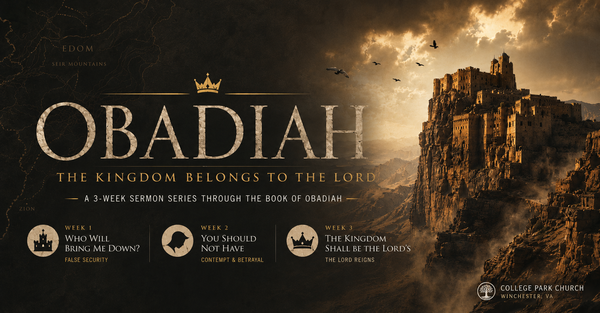
It's very easy for us to dismiss things we see as small. The question was asked about Jesus, "What good can come out of Nazareth?" As we begin our three-week series in the book of Obadiah this week, it would be easy to ask the same thing. What good can come out of a book that is 21 verses long, the shortest in the Old Testament, written 2,600 years ago, in a city we've likely never visited, to a people whose name might be familiar but we've never really heard or thought much about?
It's funny, because the answer to that question is actually found in the question. Pride. We look at things that seem smaller or less important and we just dismiss them. The book of Obadiah is a direct confrontation of pride. The first half of the book describes pride. The second half of the book shows God's response to pride. The book of Obadiah is not just a book written about Edom promising judgment on them for their sins; it is a mirror held up to our lives.
Adam, Edom, man - they are all linguistically related in Hebrew. When it comes to Bible stories, we like to view ourselves as the hero, like David fighting Goliath. The reality is far more sobering. The hero in all the Old Testament is Jesus, and in the book of Obadiah, we are Edom, mankind, who, in our pride, face judgment.
The wonder of Obadiah is that it confronts our pride but does not leave us in judgment but rather, it offers hope for those who humble themselves before King Jesus.
